
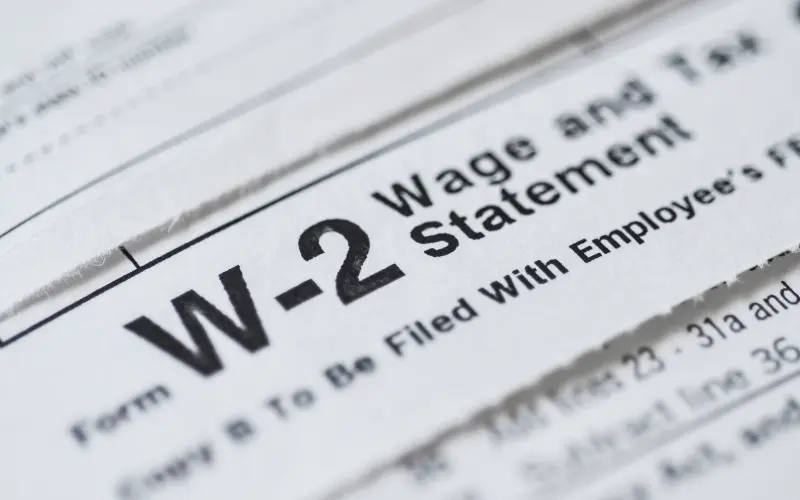
When it comes to payroll and tax reporting, two forms often cause confusion for employers and employees alike: the W2 and the W4. While they sound similar, they serve very different purposes. Understanding the differences between W2 and W4 forms is essential for accurate payroll processing, proper tax withholding, and overall compliance.
If you manage employees, process payroll, or are responsible for onboarding new hires, knowing how these forms work can prevent costly errors and unnecessary stress during tax season.
What Is a W4 Form?
The W4 form, officially called the Employee’s Withholding Certificate, is completed by employees. It is typically filled out at the start of employment and updated whenever an employee experiences a major life change, such as marriage, divorce, or having a child.
The purpose of the W4 is to tell the employer how much federal income tax to withhold from the employee’s paycheck. The information provided on this form directly impacts the amount of taxes deducted each pay period.
Employees use the W4 to indicate filing status, multiple jobs, dependents, and any additional withholding they may want applied. The form does not calculate taxes automatically; rather, it guides the payroll system in determining proper withholding.
For employers, the W4 is a foundational payroll document. It ensures that tax withholding aligns with IRS requirements and helps reduce the risk of under- or over-withholding federal income tax.
What Is a W2 Form?
Unlike the W4, which is completed by the employee at the start of employment, the W2 form is prepared by the employer at the end of each calendar year.
The W2, also known as the Wage and Tax Statement, summarizes an employee’s total earnings and tax withholdings for the year. It reports wages, tips, federal income tax withheld, Social Security and Medicare contributions, and other relevant payroll information.
Employers must provide W2 forms to employees by January 31 each year. The same information must also be filed with the Social Security Administration. Employees use their W2 to complete their personal tax returns.
In short, the W4 helps determine how much tax is withheld throughout the year, while the W2 reports what actually happened during the year.
What are the Key Differences Between W2 and W4 Forms?
The easiest way to understand the difference is to think about timing and purpose.
The W4 is forward-looking. It is used at the beginning of employment (and whenever updates are needed) to guide tax withholding decisions. It affects future paychecks.
The W2 is backward-looking. It summarizes what the employee earned and what taxes were withheld during the past year.
Another important distinction is who completes the form. The W4 is filled out by the employee, while the W2 is generated and distributed by the employer.
Confusing these forms can create payroll errors. For example, failing to collect a W4 from a new hire may result in incorrect withholding. On the other hand, failing to issue W2 forms properly can lead to compliance issues and penalties.
Why Accuracy Matters for Employers
Accurate handling of W2 and W4 forms is not just an administrative task. It directly impacts compliance with federal tax laws.
If a W4 is processed incorrectly, an employee may have too little tax withheld, which could result in a tax bill at the end of the year. Conversely, excessive withholding can reduce employee take-home pay unnecessarily.
If W2 forms are incorrect or submitted late, employers may face penalties from the IRS and the Social Security Administration. Errors can also create confusion for employees during tax season and damage trust.
Payroll systems must be set up correctly to capture W4 data and generate accurate W2 reporting. Even small errors in Social Security numbers, wages, or withholding amounts can cause problems.
When Should Employees Update Their W4?
While employees complete the W4 at the start of employment, it should not be viewed as a one-time form.
Employees may need to update their W4 after significant life events. Changes in marital status, the birth of a child, starting a second job, or changes in household income can all impact withholding needs.
Employers should remind employees that they are responsible for keeping their withholding information current. However, employers should not provide tax advice. Instead, employees can consult IRS guidance or a tax professional if they are unsure how to complete the form.
W2 & W4 Forms: What are the Best Practices for Employers?
Managing W2 and W4 forms effectively requires organization and consistency.
Employers should ensure that every new hire completes a W4 as part of the onboarding process. Digital onboarding systems can streamline this step and reduce paperwork errors.
It is also important to maintain secure records. Both forms contain sensitive employee information, including Social Security numbers and wage data. Protecting these documents should be part of your broader data security strategy.
As year-end approaches, payroll teams should verify employee information before generating W2 forms. Confirming addresses and personal details early can prevent returned mail and reporting errors.
Common Mistakes to Avoid
One common mistake is assuming the W4 determines how much tax an employee ultimately owes. The W4 only controls withholding during the year. The final tax liability is calculated when the employee files their personal tax return.
Another mistake is confusing W2 forms with 1099 forms. W2 forms are for employees, while 1099 forms are used for independent contractors. Misclassification can create significant compliance risks.
Employers should also avoid giving specific tax advice when employees have questions. While it’s appropriate to explain what the form is for, tax planning guidance should come from qualified professionals.
Final Thoughts Regarding W2 & W4 Forms
Learning the differences between W2 and W4 forms helps simplify payroll management and prevent compliance headaches. The W4 guides how much tax is withheld from an employee’s paycheck, while the W2 reports total wages and withholdings at year-end.
Both forms play a critical role in the payroll process, and accuracy matters at every step.
If you need support managing payroll, onboarding documentation, or year-end reporting, HRDelivered can help. From tax form compliance to full-service HR support, we partner with businesses to keep payroll accurate and stress-free.
Contact HRDelivered today to learn how we can simplify your payroll and HR processes.
The Insights Delivered podcast is now available to stream.
Hear HR experts from HRDelivered break down real workplace topics, compliance updates, and the HR questions employers are facing right now.