
Supporting employees goes beyond offering competitive pay and traditional benefits. Today’s workforce faces stress, burnout, financial strain, family challenges, and mental health concerns at higher levels than ever before. One of the most effective ways employers can support their teams is through an Employee Assistance Programs (EAP)—a confidential resource designed to help employees navigate personal and work-related challenges.
EAPs are becoming a staple in modern benefits packages, and for good reason. When employees have access to mental health support, counseling, and everyday life resources, they show up healthier, more focused, and better able to perform at work.
Let’s take a closer look at the advantages of employee assistance programs and why every small–mid-sized business should consider offering one.
What Is an Employee Assistance Program?
An Employee Assistance Program (EAP) is a confidential support service that helps employees manage personal issues that may affect their well-being, performance, or job satisfaction.
Most EAPs offer:
- Short-term mental health counseling
- Stress and anxiety support
- Guidance for personal or family crises
- Financial counseling and budgeting help
- Legal information and referrals
- Substance abuse support
- Work-life resources like childcare or eldercare assistance
EAPs are available at no cost to employees and often extend to household family members as well—making them a powerful, inclusive resource.
How Do Employee Assistance Programs Work?
EAP services are typically offered through a third-party vendor. Employees and their family members can access the program through:
- A 24/7 hotline
- Virtual or phone counseling
- In-person sessions (depending on the program)
- Online tools and self-guided resources
All EAP interactions are confidential, which protects employees’ privacy and encourages them to seek help early—before issues escalate.
Employers do not receive names or personal details, only general usage data.
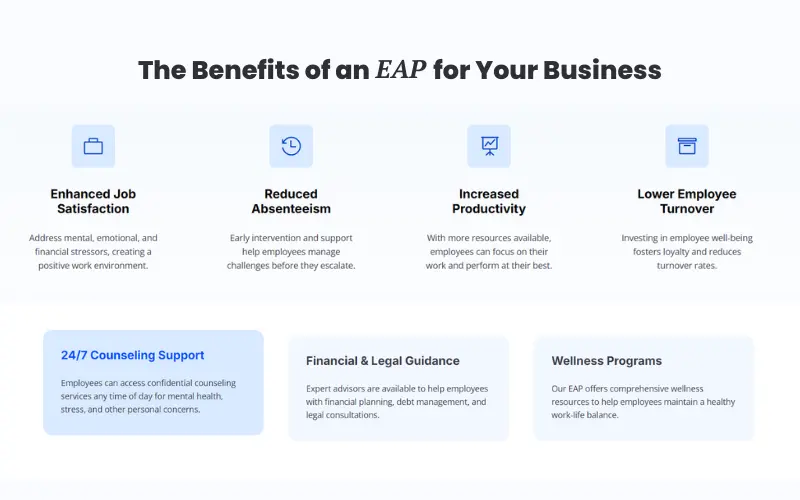
Why EAPs Matter: The Top Advantages for Employers
1. Improved Employee Well-Being and Mental Health
EAPs provide immediate access to trained counselors who can support employees through stress, anxiety, grief, burnout, or family issues.
When employees feel supported, their overall well-being and engagement improve.
2. Increased Productivity
Personal issues don’t stay at home—they affect job performance, concentration, and motivation.
EAPs help resolve problems early so employees can stay focused and productive.
Research consistently shows that offering an EAP leads to:
- Higher job satisfaction
- Better performance
- Fewer workplace conflicts
3. Reduced Absenteeism
Employees dealing with stress or personal problems may miss more work or struggle to stay engaged.
EAPs provide tools to help employees manage these challenges, which leads to:
- Fewer call-offs
- Lower absenteeism rates
- More consistent performance
4. Lower Workers’ Compensation Claims
Supporting employee mental health and stress management can also help reduce safety risks and injuries—especially in high-demand or physical work environments.
Healthier employees mean fewer accidents and better decision-making on the job.
5. Better Work-Life Balance
Work-life balance is one of today’s most requested benefits.
EAPs help employees manage life outside of work, which leads to:
- Healthier boundaries
- Improved morale
- Greater loyalty and retention
6. Stronger Company Culture
Employees who feel supported—especially during personal hardships—tend to trust their employer more.
EAPs show that your company values people, not just performance.
This can strengthen:
- Culture
- Retention
- Team morale
- Long-term employee engagement
7. A More Competitive Benefits Package
Small and mid-sized businesses often struggle to compete with larger employers when it comes to benefits.
Adding an EAP is an affordable way to enhance your benefits package and attract great talent.
EAPs are especially popular among candidates looking for mental health and emotional support options—now considered essential benefits.
How Offering an EAP Supports Your Business Long-Term
The advantages of employee assistance programs extend far beyond individual support. Over time, employers who offer EAPs see improvements in:
- Organizational stability
- Manager support and communication
- Workplace safety
- Team collaboration
- Retention and turnover rates
The result is a healthier, more resilient workforce—and a company that performs better because of it.
A Final Word: Why Your Business Should Offer an EAP
As mental health needs rise and workplace stress becomes more complex, offering an EAP is one of the most meaningful—and cost-effective—ways to support your team. EAPs help employees navigate challenges early, reduce stress, improve performance, and maintain work-life balance.
If you’re looking to elevate your benefits package while creating a supportive workplace culture, an EAP is a smart and strategic investment.
Need help offering an Employee Assistance Program to your workforce?
HRDelivered offers downloadable flyers and talking points to help you promote your EAP internally. If you’re already enrolled, contact your HR Consultant to get materials for your team and help drive awareness.
Not a client yet? HRDelivered can help you implement, communicate, and manage an EAP tailored to your team’s needs.
The Insights Delivered podcast is now available to stream.
Hear HR experts from HRDelivered break down real workplace topics, compliance updates, and the HR questions employers are facing right now.