
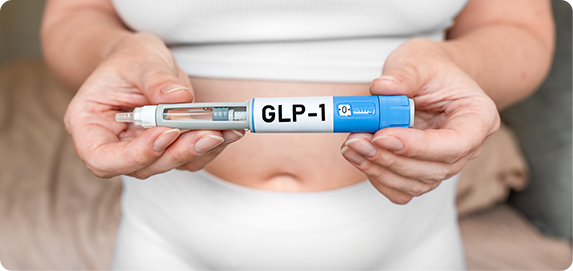
With open enrollment season approaching and the first frost showing up on windshields, one line item keeps drawing attention on health plan renewals: GLP-1 medications. These are the drugs behind brand names like Wegovy, Ozempic, and Zepbound, and they have become one of the fastest growing costs in employer health plans. Insurance carriers are narrowing what plans cover, prices are shifting, and employees are exploring options outside their insurance. For many employers, especially those on fully insured plans, the carrier decides what is available. Here is what employers should know.
A quick note before we start. This article is educational, not medical advice, and HRDelivered does not endorse any specific provider, pharmacy, or platform mentioned.
What Are GLP-1 Drugs?
GLP-1 stands for glucagon-like peptide-1, a hormone the body releases after eating. GLP-1 medications mimic that hormone. They help the body regulate blood sugar, curb hunger, and slow how quickly food leaves the stomach. They were first developed to treat type 2 diabetes and were later approved for chronic weight management as well.
One detail causes a lot of confusion: the same active ingredient is often sold under two different brand names, each approved for a different purpose and used at different doses.
| Brand Name | Active Ingredient | FDA Approved Use | Form |
|---|---|---|---|
| Ozempic | Semaglutide | Type 2 diabetes, and reducing cardiovascular risk in certain adults with type 2 diabetes | Weekly injection |
| Wegovy | Semaglutide | Chronic weight management | Weekly injection or daily pill |
| Rybelsus | Semaglutide | Type 2 diabetes | Daily pill |
| Mounjaro | Tirzepatide | Type 2 diabetes | Weekly injection |
| Zepbound | Tirzepatide | Chronic weight management, and moderate to severe obstructive sleep apnea in adults | Weekly injection |
Tirzepatide also activates a second hormone receptor (GIP), so it is technically a dual agonist, but it is commonly grouped with GLP-1 drugs. Newer oral options have also arrived, including a Wegovy pill at the end of 2025 and orforglipron (Foundayo), approved in April 2026.
This is why the distinction matters for employers. Ozempic and Wegovy contain the same drug, as do Mounjaro and Zepbound, but they are approved for different conditions. That is how a health plan can cover a GLP-1 for diabetes and not for weight loss. These are prescription medications, and whether one is appropriate is a decision for a patient and a licensed provider.
What Is Happening to GLP-1 Coverage
Coverage for weight loss is tightening, though it has not disappeared. Much of the change starts with insurance carriers and plan administrators, who decide which drugs and uses their plan designs include. In many fully insured plans, an employer can only choose from the designs its carrier offers, so adding weight loss coverage may not be an available option. Survey results differ because they measure different groups of employers, but the direction is consistent.
| Source | Finding |
|---|---|
| Business Group on Health, 2026 | Large employers covering GLP-1s for weight management fell from 72 percent in 2025 to 60 percent in 2026. 14 percent have dropped or plan to drop coverage by 2027, up from 10 percent earlier this year. |
| International Foundation of Employee Benefit Plans, 2026 | More than 90 percent of employers cover GLP-1s for diabetes, but only 36 percent also cover them for obesity. |
| Mercer, employers with 500 or more employees | 6 percent dropped weight loss coverage in 2026, and another 5 percent are planning or considering it for 2027. |
High profile examples have added to the conversation. Starbucks confirmed it will stop covering GLP-1s prescribed for weight loss for benefits eligible employees beginning in October, while continuing coverage for diabetes and other approved conditions. The practical takeaway is that coverage is now a plan by plan question. What your carrier or plan covers, and what your neighbor’s plan covers, may be very different.
Why Coverage Is Narrowing
The math is the main driver for carriers and employers alike. Brand name injectables typically carry a list price of $1,000 to $1,500 a month, and employers can end up paying 70 to 100 percent of that for each covered member, per SHRM’s reporting on the Business Group on Health survey. GLP-1s made up 11.4 percent of employer claims in 2025, up from 6.9 percent in 2023.
Pharmacy now represents 25 percent of employers’ total healthcare spend, and drug costs are projected to rise 12 percent.
Source: Business Group on Health survey of 127 employers
At the same time, demand is real. A 2025 KFF poll found about one in eight U.S. adults is taking a GLP-1. Employers are often caught in the middle: the drugs show promise for health outcomes, carriers are limiting what plan designs include, and many plan sponsors have yet to see a clear return on the spending.
Cash Pay Options Employees Are Exploring
As coverage narrows, more people are looking at paying directly. Prices change often, and introductory offers expire, so these figures are a snapshot as of October 2026.
| Route | Typical Monthly Cost | Things to Know |
|---|---|---|
| Manufacturer direct programs (NovoCare Pharmacy for Wegovy, LillyDirect for Zepbound and Foundayo) | Wegovy roughly $149 to $349 depending on pill or pen and dose. Zepbound roughly $299 to $449 depending on dose. Foundayo roughly $149 to $299 depending on dose. | A prescription is required. Insurance is not billed. Some tiers carry conditions, such as refilling within 45 days to keep the lower Zepbound price. |
| Telehealth platforms | Varies by platform. Membership fees on published pricing run from about $25 to $149 per month, often with a lower first month, on top of the medication price. | Some accept cash only, and some also work with insurance. Medication is priced separately from the membership. Some platforms sell only FDA approved brand name products, and others also offer compounded versions. |
| Standard pharmacy list price | $1,000 to $1,500 for brand name injectables | This is the price most cash pay programs are designed to undercut. |
To show how the telehealth model adds up, here are two published examples as of October 2026. They are examples, not recommendations, and other platforms price differently. Fortune’s October 2026 review of seven online programs found membership fees across that $25 to $149 range. In both examples below, the medication is priced separately from the membership, so the all in cost is the two added together.
| Platform | Membership | Lowest Priced Medication Options | All In Monthly Cost |
|---|---|---|---|
| GoodRx Care Direct | $39 per month | Wegovy pill from $149, Wegovy pen from $199 (introductory) | $188 to $238 at the lowest doses |
| Hims | $39 for the first month, then $149 per month | Wegovy pill from $149, Wegovy pen from $199, Zepbound from $299 | $188 to $338 in the first month, then $298 to $448 |
Higher doses cost more, some introductory offers end December 31, 2026, and a membership does not guarantee a prescription, since a provider must determine the medication is medically appropriate. Availability also varies by state. One detail worth knowing for employees with HSAs or FSAs: on one of these platforms, the medication is eligible but the membership fee is not. For comparison, manufacturer programs list Wegovy pill pricing starting at $149 with no membership, though they typically require a prescription from a provider you already have. The membership is what buys the provider access.
One more distinction matters. Compounded versions of these drugs are not FDA approved. In March 2026 the FDA announced 30 warning letters to telehealth companies over marketing claims for compounded GLP-1 products, including claims implying they are comparable to approved therapies. Anyone considering a telehealth route should ask directly whether the product is an FDA approved brand or a compounded version.
Why Cash Pay Is Not Automatically Cheaper
For employees, a lower sticker price does not always mean a lower total cost:
- Membership fees. Telehealth memberships add a monthly fee on top of the medication price, so the all in cost is what matters when comparing.
- Deductible and out of pocket maximum. Purchases made outside the pharmacy benefit may not count toward the plan deductible or out of pocket maximum.
- Insured cost can be lower. If a plan does cover the drug, the copay after prior authorization can be less than the cash price, which is why comparing both routes matters.
- Care coordination. Medications bought outside insurance may not appear in a patient’s medication history, which can complicate drug interaction checks.
- HSA and FSA funds. Employees may be able to use these accounts for qualifying prescriptions, though membership fees may not qualify. They should confirm with their plan administrator.
For the plan, purchases made outside the pharmacy benefit do not show up as claims. That is a real cost effect and part of why this approach is drawing attention. It is also a reason to be thoughtful about how it is discussed, which the compliance section below covers.
What Options Employers Have
What an employer can do depends on its plan type and what its carrier or plan administrator allows. Some of the approaches below may not be available on every plan, so the first step is finding out which designs are actually on the table at renewal.
| Approach | How It Works | Trade-off |
|---|---|---|
| Keep coverage with controls | Prior authorization, clinical criteria, or required participation in a weight management program | Preserves access, but still carries significant cost and administrative work |
| Cover for diabetes and other approved conditions only | Excludes the weight loss indication | Employee reaction, and legal review for disability and nondiscrimination rules |
| Carve out to a specialized vendor | Fixed, negotiated prices outside the standard pharmacy benefit | Purchases may not count toward deductibles, and coordination concerns apply |
| Reimburse through an HRA | Employees buy through their chosen channel and are reimbursed up to a set limit | Plan design and compliance requirements apply, and a weight management program may be required |
| Share neutral information only | Tell employees what options exist without endorsing any | Must avoid creating a sponsored program or steering employees |
Compliance and Communication Guardrails
GLP-1 decisions are visible and emotionally charged, so how a change is handled matters as much as the change itself. A few principles show up consistently in legal analysis from Morgan Lewis and other benefits law firms:
- No federal mandate, but real exposure. The ADA does not by itself require coverage for any particular condition. Even so, limiting coverage can raise disability and HIPAA nondiscrimination questions, so benefits counsel should review plan language.
- Document and apply consistently. Record the rationale for coverage decisions and apply the rules the same way to similarly situated employees.
- Change at the right time, with clear notice. Mid year changes carry more risk. Updates are generally best made at the start of a plan year and communicated in plan documents and open enrollment materials.
- Informing is not the same as sponsoring. Sharing neutral information is different from contracting with or formally endorsing a telehealth provider, which can create plan obligations of its own and can affect HSA eligibility on high deductible plans.
- Protect privacy. Keep messaging general and never single out individuals based on health status.
A Quick Gut Check
- Do you know whether your carrier offers a plan design that covers GLP-1s for weight loss, and how your current plan treats them versus diabetes?
- Has your plan language been reviewed for ADA and HIPAA nondiscrimination exposure?
- If your coverage is changing for 2027, are employees hearing it from you before open enrollment?
- Do you know what percentage of your pharmacy spend is going to GLP-1s today?
If any of these got a “not sure,” renewal season is the right time to find out.
Frequently Asked Questions
What is the difference between Ozempic and Wegovy, or Mounjaro and Zepbound?
Each pair shares the same active ingredient. Ozempic and Wegovy contain semaglutide, and Mounjaro and Zepbound contain tirzepatide. The difference is the approved use and dosing: Ozempic and Mounjaro are approved for type 2 diabetes, while Wegovy and Zepbound are approved for chronic weight management.
Can my company choose to cover GLP-1s for weight loss?
It depends on your plan type and what your carrier or plan administrator offers. Some plan designs do not include weight loss coverage at all, and options are often set at renewal. Your benefits team or broker can tell you which designs are actually available to you.
Are most employers dropping GLP-1 coverage for weight loss?
Not most, but a growing number. Surveys put coverage between 36 and 60 percent depending on the employer group measured, and the share dropping or planning to drop it is rising. Coverage is tightening rather than disappearing.
How much does a telehealth route cost per month?
It depends on the platform, medication, and dose, and it is always the membership plus the medication. On the two published examples above, the first month for lower dose options runs about $188 to $338, and ongoing months run about $188 to $448. Introductory prices on lower doses typically rise as the dose increases.
Is cash pay always cheaper than going through insurance?
No. If a plan covers the drug, the insured cost after prior authorization can be lower. Cash pay tends to help most when a plan excludes the drug or the cost share is high.
Is a compounded GLP-1 the same as the brand name drug?
No. Compounded products are not FDA approved. Anyone using a telehealth platform should ask which product is being prescribed.
Can an employer simply tell employees to use cash pay options instead of the plan?
Sharing neutral information is one thing. Endorsing, contracting with, or steering employees to a specific provider raises plan design, privacy, and compliance questions. Talk to benefits counsel first.
Do cash purchases count toward the deductible?
Generally not. Purchases made outside the plan’s pharmacy benefit may not count toward the deductible or out of pocket maximum.
How HRDelivered Helps
GLP-1 decisions touch plan design, costs, compliance, and employee communication all at once. HRDelivered’s benefits team can walk through how GLP-1 medications are handled under your current plan, compare options before your renewal date, and help you plan how changes are explained to employees. Our compliance team can help review plan language and communications, and the wellness programs available through HRDelivered’s benefits can support the weight management side of the conversation.
If your renewal is coming up and GLP-1 spending is on your radar, start with the numbers.
Request Your Free Benefits Review
Not ready for a full review? Learn about HRDelivered’s health insurance options or talk to a benefits specialist first.